Spectacle, Lore, and Crossovers: How Bollywood is Redefining the Modern Cinematic Era
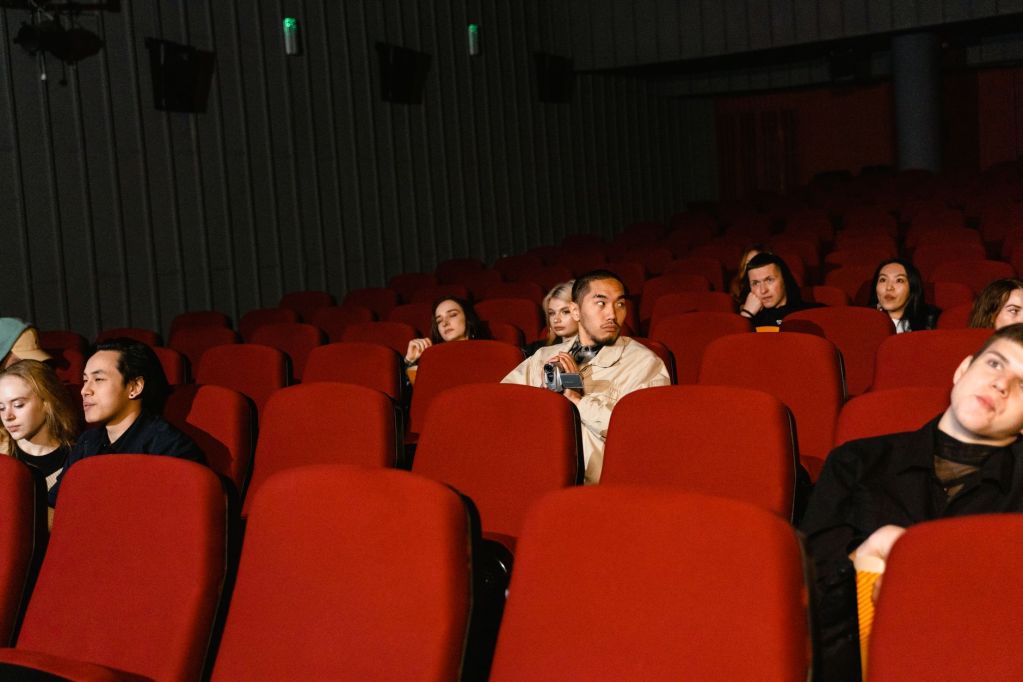
In Mumbai, the heart of India’s Hindi film industry, a dramatic transformation is unfolding as major production houses deploy record-breaking budgets on franchise expansions, cinematic universes, and cross-industry collaborations to secure theatrical dominance. This strategic pivot comes in response to shifting consumer habits, intense competition from South Indian cinema, and the pervasive influence of global streaming platforms. Producers are increasingly relying on high-concept spectacles and established intellectual properties to lure audiences back to the silver screen.
The Post-Pandemic Paradigm Shift
The Hindi film industry has undergone a massive structural realignment over the last three years. Following a prolonged period of sluggish box office returns and a string of high-profile flops, Bollywood studios realized that traditional star vehicle formulas no longer guaranteed financial success. Audiences, accustomed to high-quality international content on streaming services during lockdowns, began demanding higher production values and more engaging narratives.
This demand forced a clear polarization in the market. According to data from media consulting firm Ormax Media, theatrical footfalls in India have bifurcated into two distinct categories: massive, event-driven spectacles and highly localized, word-of-mouth-led narratives. The middle-ground, mid-budget social dramas that once formed the backbone of Bollywood are now struggling to find a theatrical audience, often transitioning directly to digital platforms.
To combat this, major studios like Yash Raj Films (YRF), Maddock Films, and Rohit Shetty Picturez have shifted their focus toward building expansive cinematic universes. This strategy not only mitigates financial risk by leveraging pre-existing fan bases but also creates recurring revenue streams across merchandising, music rights, and digital licensing.
The Rise of the Indian Cinematic Universe
The most significant trend dominating the current Bollywood landscape is the unprecedented success of shared cinematic universes. Leading this charge is Maddock Films’ Supernatural Universe, which achieved historic success with the release of the horror-comedy sequel Stree 2. The film shattered domestic box office records, grossing over ₹800 crore (approximately $96 million USD) globally, making it one of the highest-grossing Hindi films of all time.
Industry analysts point out that the success of the Maddock Supernatural Universe lies in its unique blend of folklore, comedy, and localized storytelling. Unlike Western superhero franchises that rely heavily on green screens and cosmic threats, these films are deeply rooted in Indian small-town culture and mythology. The seamless integration of characters across different films, such as cameos from characters in Bhediya and Munjya, has created a highly engaged community of fans who dissect every trailer and post-credit scene.
Simultaneously, the Yash Raj Films Spy Universe continues to expand its footprint. Following the massive success of Pathaan and Tiger 3, YRF has greenlit several highly anticipated projects, including War 2 and the female-led spy thriller Alpha, starring Alia Bhatt and Sharvari. This universe relies on high-octane action, international locations, and the star power of India’s biggest icons, creating a glossy, Hollywood-style cinematic experience that demands to be seen on the largest screens possible.
The Pan-India Synergy and Cross-Border Castings
Another defining characteristic of modern Bollywood is the dissolution of regional boundaries within Indian cinema. The term “Pan-India” has transitioned from a marketing buzzword into a concrete business model. Bollywood filmmakers are increasingly collaborating with directors, writers, and actors from the Telugu, Tamil, Kannada, and Malayalam film industries to maximize their reach across the subcontinent.
This synergy is evident in the casting choices of upcoming mega-budget films. For instance, YRF’s War 2 features Telugu superstar NTR Jr. alongside Bollywood’s Hrithik Roshan, a casting coup designed to capture both the North and South Indian markets. Similarly, the sci-fi epic Kalki 2898 AD, though primarily a Telugu production, featured a star-studded Hindi cast including Amitabh Bachchan and Deepika Padukone, resulting in a massive ₹1,000 crore global haul.
Trade analyst Taran Adarsh notes that these cross-industry collaborations are essential for recovering the massive production costs of modern spectacles. By combining the star power of different regions, producers can ensure strong opening-day collections across multiple territories, insulating themselves against localized box office slumps.
The Resurgence of Storytelling: Mid-Budget Disruptors
While action spectacles and cinematic universes dominate the headlines, a parallel movement of content-driven cinema is proving that narrative depth still holds immense commercial value. The surprise success of smaller, story-focused films has provided a vital counter-narrative to the belief that only big-budget action can survive in theaters.
Kiran Rao’s comedy-drama Laapataa Ladies (Lost Ladies) emerged as a critical and commercial darling, eventually being selected as India’s official entry for the 97th Academy Awards. Produced on a modest budget, the film relied on a witty script, strong performances from newcomer actors, and positive word-of-mouth to sustain a long theatrical run before finding a massive global audience on Netflix.
Similarly, Vidhu Vinod Chopra’s 12th Fail demonstrated the enduring power of inspirational, real-life human stories. The film, which tells the story of an impoverished student striving to pass India’s toughest civil services exam, became a sleeper hit, grossing over ₹70 crore against a minimal budget. These successes highlight a crucial lesson for the industry: while spectacle attracts audiences initially, emotional resonance and strong writing are what guarantee longevity and cultural impact.
Box Office Economics and the Threat of Rising Costs
Despite these success stories, the Bollywood business model faces significant internal pressures, particularly regarding rising production costs and star fees. Industry insiders have raised alarms over the escalating demands of top-tier actors, whose upfront fees often consume a disproportionate share of a film’s total budget. This imbalance leaves fewer resources for post-production, visual effects, and marketing.
According to reports from Indian entertainment portal Pinkvilla, several high-profile projects have been put on hold or shelved entirely due to unsustainable budgetary demands. Producers are now pushing for profit-sharing models rather than massive upfront payouts to align the stars’ financial interests with the actual box office performance of the film.
Furthermore, the rising cost of cinema tickets in metro cities has become a barrier to entry for middle-class families. With average ticket prices and concession costs rising sharply, moviegoing has become an occasional luxury rather than a weekly routine. This trend has put immense pressure on filmmakers to deliver a “paisa vasool” (value for money) experience, as audiences are hesitant to spend their hard-earned money on films they perceive as average.
The Changing Landscape for Exhibitors and Streaming Platforms
The relationship between theatrical exhibitors and over-the-top (OTT) streaming platforms has also reached a critical stabilization point. After a period of intense rivalry during the pandemic, a symbiotic relationship has emerged. The standard theatrical window—the period between a film’s cinema release and its digital debut—has stabilized at eight weeks for major Hindi releases, protecting the interests of theater owners.
Streaming giants like Netflix, Prime Video, and Disney+ Hotstar have adjusted their acquisition strategies. Rather than purchasing films for direct-to-digital releases at premium prices, they are now prioritizing post-theatrical streaming rights. A strong theatrical run has been shown to significantly boost a film’s viewership numbers when it eventually debuts on digital platforms, creating a win-win scenario for both exhibitors and streamers.
Additionally, the merger of major media conglomerates, such as the high-profile alliance between Reliance Industries (JioCinema) and Disney Star, is set to reshape the distribution landscape. This consolidation of digital and linear broadcasting power is expected to give these giants unprecedented leverage in negotiating content acquisition and distribution deals, further influencing how movies are made and consumed in India.
Looking Ahead: The Upcoming Slate to Watch
As the industry navigates these shifting dynamics, the upcoming slate of releases promises to test the limits of Bollywood’s new business models. Audiences can look forward to highly anticipated sequels like Singham Again, which unites Ajay Devgn, Akshay Kumar, Ranveer Singh, and Deepika Padukone in what is being billed as the ultimate cop crossover. This massive ensemble piece will serve as a crucial test of whether star-studded crossovers can continue to justify their astronomical budgets.
On the horizon, legendary filmmaker Sanjay Leela Bhansali is preparing his next grand romance, Love & War, featuring Ranbir Kapoor, Alia Bhatt, and Vicky Kaushal. Known for his opulent sets and classical storytelling, Bhansali’s project will test whether traditional, high-drama romance can still command the box office in an era dominated by action and horror-comedy. Meanwhile, development continues on Nitesh Tiwari’s ambitious adaptation of the epic Ramayana, a project poised to push the boundaries of Indian visual effects and mythological storytelling on a global scale.